- CDNLive! Silicon Valley 2008 is the Cadence Users' annual conference in San Jose, a la Synopsys SNUG. It's worth checking out if you're a Cadence user. I haven't gone regularly but plan to attend this year. I hope to see you there.
- Cadence Community is a newly designed web community with blogs, white papers, etc. It looks much better than their prior site, and I'm hopeful that it will attract a critical mass of knowledgable users. The previous site tended to have too many off-the-wall or newbie questions to have a useful signal/noise ratio.
Friday, August 22, 2008
Cadence Reaches Out
Much has been written in recent weeks about Cadence's surprise bid for Mentor Graphics and subsequent abandonment of the deal.
It's not the proudest time in the EDA industry.
Happening in the meantime, garnering less publicity,
are two promising initiatives that Cadence is taking to reach out to customers.


Friday, August 15, 2008
Cadence withdraws proposal to buy Mentor Graphics
Breaking news:
Cadence withdraws proposal to buy Mentor Graphics - San Jose Mercury News.
Is this related to Cadence could find it tough to raise debt for bid? (Thanks to Daniel Payne for sharing the link through Plaxo.)
Thursday, August 14, 2008
An Investor's View of Top Semiconductor Stocks
Sramana has a concise summary of her take on big semi companies and their prospects at Top 10 Semiconductor Stocks - Sramana Mitra on Strategy.
Agree or not, she has a pretty good handle on technology and business and presents her case clearly. It's a good starting point to form your opinions.
Sunday, August 03, 2008
Dilbert on Management
It's tempting to comment, but I'll let Dilbert speak for itself.
 I apologize if the formatting is messed up in the blog. Click on the strip to see it at Dilbert's site.
I apologize if the formatting is messed up in the blog. Click on the strip to see it at Dilbert's site.
Wednesday, July 23, 2008
Merger Musings
"EDA Peggy" Aycinena has written a thought-provoking analysis & commentary (dare I say synopsis?) of Cadence's bid for Mentor Graphics in
EDACafe Weekly : The Summer of Our Discontent: War Games in EDA.
She's rather cynical on the motivations of some corporate management. I think there's a good dose of truth here. How many mergers are done to appear to be "doing something", even though there's a good chance it won't ultimately create value.
But inquiring minds want to know, will some CEO be able to buy oodles of Ferragamos with the bonus from the merger?
Friday, July 11, 2008
Interview Do's and Dont's
So I'm recruiting for a design methodology engineer and have been screening resumes and doing interviews. This experience leads me to want to share some advice that not everyone seems to know.
Do
- Send your resume in PDF (Acrobat). I know that .doc (Word) is the de facto standard, but I've seen some really strangely rendered resumes coming across in Word. In PDF, it really is what you see is what you get.
- Check spelling and grammar carefully. I mean, duh! For a document this important, isn't it worth the extra effort? You should also have another person (preferably an English major :-) proofread it.
- Keep it concise. As you go describe long-ago experience, you don't need to detail everything you've done. The classic guidance is to fit your resume on one page. I know that's difficult, but once it gets to three pages or more, you're probably including too much.
- In an interview, pay attention to your "talk/listen ratio". I just made that term up. It's important to make sure you understand the question and get periodic feedback that you're on the right track before launching into a soliliquy about all that you know.
- Assume the (first) interview will be non-technical. Some companies interview easier than others. But for the case where you really get grilled, you better have done your homework. Better safe than sorry.
- List project specs or customer names (non-public information) on your resume. I'm pretty sure this is technically in violation of some employment agreement or NDA. I'm surprised at how specific some resumes are, listing the customer name, content and specs of chips they've worked on. You can "sanitize" this information and still convey the complexity of what you've done.
- Make incredible claims for your contributions. I understand that you want to put your best face forward, and maybe even puff up things a big. But when I read that you "architected, developed, and implemented" a major feature of a tool in eight months, ...
Thursday, July 10, 2008
10 Great Tech Books
There's more to life than books, you know, but not much more.
I love books and "top 10" or "must read" lists, so IEEE Spectrum: 10 Great Tech Books is irresistable.
Which are your favorites?
Which ones were missed?
I've only read two of them:
The Design of Everyday Things


Friday, June 27, 2008
Shine On You Crazy Designers
Denali is famous for throwing the best parties at DAC. I wish I had been there to see these performances. See more at YouTube - DenaliDacParty's Channel.
Tuesday, June 24, 2008
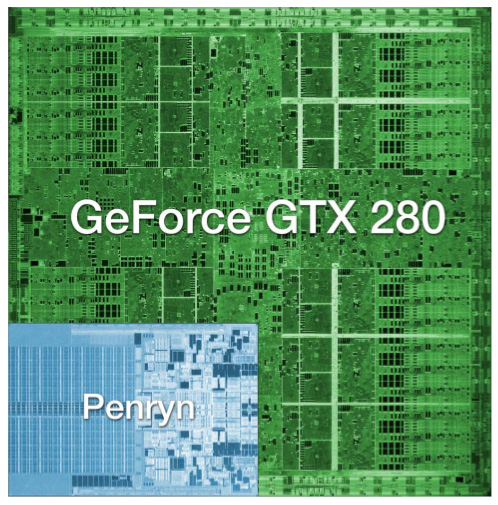
A Chip Carl Sagan Would Be Proud Of
Remember the great astronomer Carl Sagan? He had a famous catch phrase describing the enormity of the universe, talking about "billions and billions" of objects.
In reading up on Carl Sagan,
- I was reminded of the petty and very amusing feud between Sagan and Apple Computer.
- I learned that "the indefinite and fictitious number Sagan has arisen in popular culture to indicate a count greater than 4 billion." Thanks to Moore's Law, we'll see the first "Sagan-chip" before you know it.
Thursday, June 19, 2008
Mendence, the Merger
We have to come up with a clever name for the combination of Cadence and Mentor. Chris Edwards coined* Cadentor, which is actually a pretty decent name. Going the other way, Mendence is too close to "menace" or "mendacity", so I suppose the PR types won't buy that. (When AMD bought ATI, the irreverent press dubbed it DAAMIT.)
Cadence's unfriendly bid to acquire Mentor Graphics is red meat for the EDA blogoshpere! (Be sure to click on that link. It's a fascinating one-page summary of dozens of EDA news & opinion sources.)
I've read many thoughtful commentaries on the possibility. Frankly, most of them are unfavorable on the deal. Some of the substantial analyses:
- Can you guess Gabe's take on Cadence's arrogance?
- Chris Edwards initial take.
- Later, Chris has a very pretty picture of how the companies' main products line up at Overlaps 'r' us.
- Ron Wilson has a possible explanation (conspiracy theory?) for Cadence's motivations.
Two of the more curious quips I read:
- Customers don't want the EDA vendor to provide a complete front to back flow. They want best of breed tools, and for third party companies to link them together. I agree that we need best of breed tools, but not that we need third party companies to hook them together. Are there examples of companies that make a good business of that? That sounds like an ASIC company, and they aren't exactly thriving. There also used to be a company called Reshape that had their own physical design flow on top of commercial tools. But they ended up going out of business.
-
Cadence acquiring Mentor could present a big challenge to Synopsys.
Well, I don't know.
When two established giants come together, what technological advance does that enable?
Not much that I can see.
A bigger challenge is when a giant acquires a startup with hot new technology: think Cadence with Get2Chip, or potentially Mentor with Sierra Design Automation.
One successful big acquisition was Synopsys acquiring Avant! --
I don't know what went on under the covers, but the products were complementary and continued to be successful after the deal was done.
Of course, there may be "business synergies" -- cutting common administrative and infrastructure costs, and having a bigger menu for "all you can eat" deals. But it's kind of sad if one of the biggest business events in EDA just comes down to that.
*Update: Gabe Moretti lays claim to coining "Cadentor". I'll let Chris and Gabe hash it out.
Tuesday, June 17, 2008
NEWS FLASH: Cadence Proposes to Acquire Mentor Graphics
And then there were three?
This just in:
Cadence Proposes to Acquire Mentor Graphics for $16.00 per Share in Cash.
What is Mentor good at? I haven't used their tools recently, but by reputation I think they're strong at
- DFT (FastScan)
- LVS/DRC (Calibre)
- Simulation (former ModelSim)
- Certain pieces of Place & Route (Sierra)
So, does Cadence need some or all of these pieces because they're not strong? That's certainly the case for DFT: Mentor is a leader and Cadence is an also-ran. Or are they just "buying" Mentor's customer base?
UPDATE: Other blog reactions:
- Cool Verification. A verification tools perspective.
- EDA Thoughts. No, honestly -- tell us what you really think of the merger!
- EDA Cafe. Several news releases, including Cadence's own presentation on the deal.
- Sramana Mitra on Strategy. She's been calling for a consolidation in EDA, or some kind of shakeup in the business model. Her post has a good selection of links to her previous writings on the EDA business. This post also has the best comments thread on the topic.
Thursday, June 12, 2008
One More Thing: Apple to Tackle Parallel Computing
 Apple in Parallel: Turning the PC World Upside Down? - Technology - New York Times Blog quotes Steve Jobs
in a discussion of harnessing multi-core computing:
Apple in Parallel: Turning the PC World Upside Down? - Technology - New York Times Blog quotes Steve Jobs
in a discussion of harnessing multi-core computing:
Apple, he asserted, has made a parallel-programming breakthrough.It is all about the software, he said. Apple purchased a chip company, PA Semi, in April, but the heart of Snow Leopard will be about a parallel-programming technology that the company has code-named Grand Central.
“PA Semi is going to do system-on-chips for iPhones and iPods,” he said.
Grand Central will be at the heart of Snow Leopard, he said, and the shift in technology direction raises lots of fascinating questions, including what will happen to Apple’s partnership with Intel.
Snow Leopard will also tap the computing power inherent in the graphics processors that are now used in tandem with microprocessors in almost all personal and mobile computers. Mr. Jobs described a new processing standard that Apple is proposing called OpenCL (Open Compute LibraryComputing Language) which is intended to refocus graphics processors on standard computing functions.
“Basically it lets you use graphics processors to do computation,” he said. “It’s way beyond what Nvidia or anyone else has, and it’s really simple.”
Since Intel trails both Nvidia and A.M.D.’s ATI graphics processor division, it may mean that future Apple computers will look very different in terms of hardware.
Will OpenCL be an alternative to NVIDIA's Cuda software interface? Read the comments in the NY Times blog for some good technical analysis and the usual passion that surrounds any Apple pronouncement.
Update: see a thoughtful perspective in Chris Edward's blog.
Wednesday, June 11, 2008
Tantalizing But Flawed
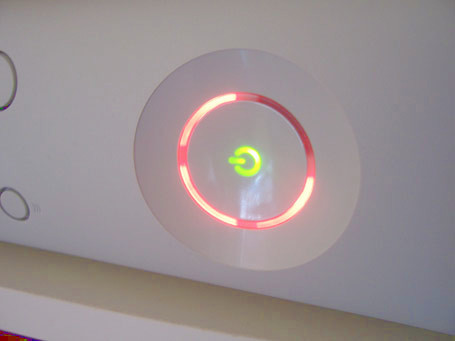
I find the story frustrating and a bit flawed in helping to get to the truth of the matter. The article blames Microsoft's troubles on "bypassing an ASIC vendor to go directly to TSMC". But then it mentions ATI Technologies as a likely ASIC vendor. Huh? ATI, an ASIC vendor?
I would call ATI more of a "contract design house" in this deal. They have considerable graphics IP, and designed the GPU for the Xbox 360. (NVIDIA designed the GPU for the original Xbox.) Perhaps Microsoft decided to take only the design (netlist or GDS2) from ATI, and manage the silicon operations and production ramp themselves. That could be where they went astray. By not contracting with an experienced semiconductor company (like ATI or NVIDIA) to manage all the silicon issues, they exposed themselves to more risk. And maybe that came back to bite them in the form of the product defects exemplified by the "red ring of death" and led to product recalls.
Penny wise and pound foolish, Microsoft?
Monday, June 09, 2008
DAC 2008 Meta-Must-See List
That's right, readers. This is a list about lists!
I search the internet, so you don't have to.
-- From "your friend in the EDA Blogging business".
(apologies to Tom Shane)
- Cheesy John Cooley's Must See List for DAC
- Ten top technology developments to see at DAC, SCDsource (Richard Goering)
- Gabe's teaser of Gary Smith's list. Looks like you have to visit them at DAC to get the real list. Gary has enough clout that companies issue press releases when they make his list!
- Gary Smith interviewed on YouTube. He names some significant trends in EDA this year, including Analog and Low Power design. The "Software" trend is a little harder to see; I know Gary has been calling for ESL to take off for a few years now.
Tuesday, June 03, 2008
What "EDA Blogger Birds" Could Squawk About
Next week at the Design Automation Conference, a few leading EDA bloggers are arranging an impromptu "Birds of a Feather" session at DAC. There have been several posts discussing the event. Informal Blogging Event at DAC Gains Interest has a good summary.
Although I'm not sure I'll be going down to Anaheim, I'm very intrigued by the event and would like to attend. What topics would EDA bloggers talk about? Here are some that I would like to discuss with my brethren:
- Online magazines, vendor communities, "DeepChip", and blogs: what each is good for.
- What to write about. What not to write about. What I really want to write about, but am afraid to.
- Frequency and regularity of posting.
- How to build audience. How to track audience. Support each other through linking and commenting. Use pictures? Polls?
- How to foster discussions. Pros and cons of comments. Need for an all-EDA bulletin board.
- Team blogging. (multiple authors contributing to one blog)
- Beyond blogging: social networks (LinkedIn, Plaxo). The Twitter phenomenon.
- Can you make any money? Ads: google or sponsored.
- For readers: how to find and follow blogs.
Thursday, May 22, 2008
EDA Earnings Recap
Quarterly financial results are in for the major EDA vendors.
This was Magma's turn to disappoint, causing the share price to drop almost 30%.
Mentor Graphics stock has performed the best, closely followed by Synopsys.

- Cadence Languishes On - Sramana Mitra on Strategy
- Magma Design fiscal 1st-qtr outlook disappoints investors.
- Synopsys Posts Financial Results for Second Quarter Fiscal Year 2008. Higher (non-GAAP) earnings.
- Mentor Graphics Reports Fiscal First Quarter Results. Quarterly loss. "Difficult environment". Cost/headcount controls. More importantly, projecting "a strong second half".
Wednesday, May 21, 2008
Conformal ECO Designer: Successor to ECO Compiler?
Without too much fanfare, Cadence has introduced a tool to help automate ECO creation:
Cadence Encounter Conformal ECO Designer Improves Logic Designers' Productivity.
At least I didn't see too much fanfare in the engineering press.
However, it was mentioned in Cadence's recent
earnings conference call:
... Cadence’s Encounter Conformal ECO Designer, a unique and automated capability to address the extreme pressure customers face to deliver on schedule while still achieving targets for product cost and quality. ECO stands for Engineering Change Order and unfortunately for designers these are all too common.
If you've been in the industry a few years, you'll recall that Synopsys had introduced a tool, ECO Compiler, for the same purpose. It never seemed to gain much traction, and Synopsys eventually abandoned it. I never had the chance to use ECO Compiler and I don't know why it didn't succeed. I heard some mention that it's a hard problem to solve, and that the market may have been limited. It's the type of tool that when you need it, you really need it. But you don't need to buy dozens of licenses.
It will be interesting to see how Conformal ECO Designer does -- whether it's better technology, and whether Cadence is able to make the business equation work.
Friday, May 16, 2008
From the Department of Redundancy Department
Dobbs Code Talk - Redundancy in Programming Languages
discusses why sometimes redundancy is a good thing.
Like in accounting, or computer programming.
(Or HDL programming.)
Key conclusion:
Many programming language designers mistakenly assume that removing redundancy makes programmers more productive. ...Well-designed redundancy can, however, dramatically improve productivity with its ability to uncover errors early in the development process. ...
The trick, of course, is figuring out which redundancies are good, and which aren't.
Thursday, May 15, 2008
Countdown to DAC: Design Automation Conference

If you're involved in the EDA or ASIC industries, you should consider going to 45th DAC Home: Design Automation Conference.
There are early registration discounts available for signing up before May 19, so get moving!
I mostly like DAC for the exhibits and the panels. A lot of the papers go over my head -- often PhDs presenting their thesis research on "new routing algorithms that did x% better on university benchmarks."
Monday, May 12, 2008
Profile-Guided Optimizations for Software Development
 Not being a commercial software developer,
I hadn't heard of
Profile-Guided Optimizations
(from the blog of the Opera Browser Desktop Team),
but it sounds clever:
run some "real-world benchmarks" through your application, and then recompile the application to optimize for the code path followed most often.
Not being a commercial software developer,
I hadn't heard of
Profile-Guided Optimizations
(from the blog of the Opera Browser Desktop Team),
but it sounds clever:
run some "real-world benchmarks" through your application, and then recompile the application to optimize for the code path followed most often.
Is this common in software engineering? Do EDA tools do tricks like this for best performance? Let's hope so.
Subscribe to:
Posts (Atom)